Monday, June 13, 2011

Lovely Artifacts

Franklin McMahon, from his family's website
This exhibition comprises many of the gems that I come across in the Chicago Artists' Archive that I want to share simply because they have standalone aesthetic character. Each document is a lovely piece of art all by itself, sitting quietly in the file until someone comes upon it.

Collage by Robert Nickle, from http:www.nickleengineering.com
Included in the exhibition are photographs by Margarete Gross, the previous CPL curator of the CAA, taken of the sculptural work of Gwen Lux on the McGraw-Hill building in Chicago.
 There are a pair of lovely postcards by Heather McAdams for the infamous Record Roundup. An anonymous artist's portrait from the Lill Street Art Center stood out as I read through all the very carefully identified pieces. There are a couple lovely spare black and white drawings on announcements for show by John Obuck. See announcements for Miracle Pennies and Stories by Nate Larson.

I include an article on the brilliant collages of Robert Nickle: where can I see these in person? I love them, and love the story of his process. A kinetic sculpture by Roger Machin (do I have the right guy?). There is a lovely proof sheet from Mickey Pallas of a shoot for Hula Hoop.
Included is a vintage promo piece for the illustrator Franklin McMahon, who also did hand drawn films of 1960's political events. There is a (now vintage!) black and white 8x10 from Rhona Hoffman of a Barbara Kruger installation. Kids, do you know why we used black and white 8x10 photos back in the day? Oh my. I had to include an announcement from a posthumous exhibition of work by the critical activist Richard Nickel. His work was among the first I studied when I got to Chicago. Don't miss it.

I have both flat cases this month, so the mini-exhibitions are reaching blockbuster status. Hand drawn Christmas cards from John Draves and Marcella Lewin are included, as well as charming dioramas by illustrator Jill Meyerhoff (her own photographs). An 80s show announcement from Alan Neider is beautiful on its own: check out the actual sculpture in the MoMA studio visit linked above.

The tiny annotated photograph of Electra Papadopoulos is so moving. It is at the core of the archive's special role in history. Here is an early woman artist with work archived in the Art Institute's collection. This photo represents the entirety of her file in the Chicago Artists' Archive, but because of it, I could hunt for her and discover her work.  LeRoy Nieman's bio sheet for an early exhibition at CPL is included, with his unmistakeable handwriting.

It was a pleasure to arrive at P and finally read about Ed Paschke. I included a vintage Chicago Magazine cover with Ed Paschke, Roger Brown and Henry Pope. A piece of mail art from Aron Packer shows whimsy, and a beautiful offset takeaway piece shows sculpture by David Packard. Rounding out the collection is a set of personal photographs of paintings taken by elderly painter Brar Lindberg.

I have concluded with P and am into R. The end is near! I think I would like to attempt adding all these links and more to the Archive's website. There is no online replacement for all the press, photographs and announcements that fill the Chicago Artists' Archives, but searching for these lesser known artists online reveals a number of stable sites--archived by local institutions, the Smithsonian, the artists families, and wonderful local historian gallerists Corbett vs. Dempsey--that make excellent resources for future research on these artists.

Friday, May 20, 2011

Firsts

Edmonia Lewis
When an artist is the first to do something, I take note. Forging ahead as an artist is an investment, and artists who do so while simultaneously breaking down a color barrier, or setting a new cultural precedent...they are courageous. Included in this exhibit is the story of Edmonia Lewis' Cleopatra, which was found in a mall storeroom in the Chicago suburbs. The story of the man who discovered it and the art historian who wanted to save it is very interesting.


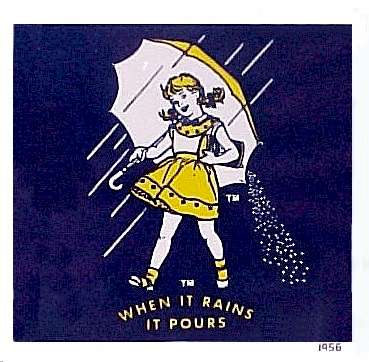
Also included is an article about Jeff Donaldson and the work he was doing at the time in Chicago with AFRI-COBRA. Lucia Lerner was an innovative illustrator and single mother working from Chicago who purportedly designed the Morton Salt girl. Nathan Lerner, who recently passed away, innovated at every turn. Geraldine McCullogh, William McBride, and the first 12x12 show at the MCA round out the show.

Friday, May 6, 2011

Photography

My husband is out of town, and while I remembered almost everything this morning--kids allergy medicine, dimes for the first grade store, check for the 4th grade party, snacks, lunches, walk the dogs, lock the doors--I did forget my notebook with my notes on the archive in it. I was due to install a new mini-exhibition, so when I realized I had forgotten it, I figured I would just wing it.
For the first time since starting to read, I browsed back through the archive, starting at A. I flipped through the files looking for photographs I remembered and found ones I had forgotten. I think I have put together the best show yet.
lots of good photography in a tiny space

There is a proof sheet from Flo-tilla, when artist made boats were floated down the river through the city. I included a haunting infrared photograph by Joan Moss. There are two of my favorites from previous exhibitions, a Jeanne Dunning announcement and two early Kenneth Josephson prints with his annotations. Announcements from shows by Joseph Jachna, Pamela DeMarris, Stephen Albair, Jane Fulton Alt, Pam Frederick and Mary Jo Bangs round out the show.  The show includes work by a photographers with commercial practices as well, including Steven Gross, William Frederking and Sam Hong.

Georgios Katsagelos
It felt like curation on speed! I imagined a museum curator going through flat files and simply pulling his or her favorites (or an emerging theme) without researching it first, without presenting an argument. It was selection as a subjective loving act—finding and showing with only a few constraints. The recent show on Ray Yoshida at SAIC curated by Corbett and Dempsey had this feeling: I think that is why it was such a moving show. So many of the early Yoshida paintings were from his own collection. I imagined them tucked away in corners of his home and studio. The related artists' works had a similar feeling of intimacy and relationship: lets use this one, Ray always loved this one, they might have said at their studio visit with the curators.

As usual I have an immense feeling of joy when I pull these mini-exhibits together: there is so much wealth in this archive. These photographs show the rich experimental honesty of artists taking pictures in Chicago.

Monday, April 18, 2011

Art Worlds

a photograph of Lee Godie by Steven Kagan, from Carl Hammer Gallery
Thousands of ways to live a creative life are represented in the Chicago Artists' Archive, from outsider artists like Lee Godie to Grace Lai, the diminuitive painter of construction sites, to artist Jeff Whitfield, former facilitator of the Creative Arts Program at Statesville Prison in IL.

While not as prevalent a myth now as in years past, the notion of the individual artist working alone is a fallacy in the economy of creative practice. One of my standby art references, recently reissued in a 25th anniversary edition, is Art Worlds. Written by one of my husband's heroes, social scientist Howard Becker, it describes how artists are deeply embedded in distributed networks. Artists never go it alone: they work with clients, organizations, dealers, administrators, technicians and marketers.

Any one folder of the Chicago Artists' Archive contains tens to hundreds of different approaches to creative practice. (Check the last names to see how far I have gotten in my reading: I am at M--actually Mc!) Artists representing a wide range of art worlds include Barbara Cooper, sculptor and public artist, wallpaper artisans Koessel Studios, art critic CJ Bulliet, painter of war Tom Lea, funder Bertha Masor, restorer Lido LippiColin McFrangos, poster artist or Bill Lavicka, scavenger writ large. Documents about these artists in the Chicago Artists' Archive reveal the larger network each practitioner builds and participates in while maintaining a high level of individual creativity and craftsmanship.


Print by Roger Brown, Cole Taylor Collection, SAIC
 One entry in the CAA is an article on Sydney Taylor, a director of Cole Taylor Bank. The bank built a large and idiosyncratic art collection and held exhibitions in their downtown bank. Taylor is quoted in an article from the period as saying,
After Martin Luther King was killed, we thought we could use art as a way to calm things down. There had been rioting. Buildings were burned down. It was scary. We started holding exhibitions as a way to help people understand the cultural contributions each group was making because we all were there together in the heart of the city.
This quote reminds me of the gentle power of setting a precedent, of making the creative gesture. The layers of worlds in that simple quotation—nation, city, neighborhood, bank, workers, collectors, artists, citizens—represent the strength of recognizing and utilizing existing networks as contexts for art.

Thursday, April 7, 2011

Art Leagues

Art Leagues are spread throughout suburban Chicago and show up frequently in the Chicago Artists' Archive.  The North Shore Art League, which serves the area where I live, seems to have been a vital place for making, seeing and presenting contemporary art by well known national artists from the 50s to the 70s. You can see by this current Google Maps search that the Art Leagues are alive and well:
Art Leagues in the Chicago area
There is very little history online about Art Leagues, but in general they are non-profit community based arts organizations that support, exhibition and teach visual arts. From what I can tell from the archive, local Leagues were inclusive and programming-oriented. An artist I am reminded of in this context is Eleanor King Hookham, an artist who had a dream to open a contemporary art museum in Elmhurst. She started by founding the Elmhurst Artist's Guild. After many years of community effort, she founded the Elmhurst Art Museum, one of our areas fine regional museums. (story from the Chicago Reader in the Chicago Artists' Archive).

Artists and Art Leagues included in this two week exhibition include:
North Shore Art League: for exhibitions and talks in the 1970s including Ben Mahmoud and Kwak Wai Lau
Oak Park Art League: for a 1980s exhibition of work by Ray Martin
Municipal Art League of Chicago: exhibition by Tom Lynch

Hidden Pages Brought to Light

My show at the CPL closed back in October, but I have continued to read the archive. I am now almost done with M so have a number of months left in my quest to read the entire collection. I am putting up bi-weekly exhibits of archival materials. I will post the artists and subject area of each exhibit here, plus any nuggets I find in a flat case on the 8th floor. Please come by and take a look!

Wednesday, October 13, 2010

mini exhibitions from the archive

Every couple weeks I am putting together a small show of work from the archive. The work is installed in a flat document case on the 8th floor entry of the Harold Washington Library Center.


Show One: Women:
Lillian Florsheim | Ruth Duckworth | Jeanne Dunning | Kathleen Blackshear | Mary Gehr Ray | Frances Badger | Eleanor Coen | Mary Arendt


women in the CAA: Ruth Duckworth's snapshots of an installation, handwritten prose by Mary Arendt
a show announcement for Jeanne Dunning, whose photographs are installed on the 8th floor.


Jeanne Dunning photograph permanently installed on the 8th floor.
Show Two: Men:
Leon Golub | Ted Gray | Joseph Goto | Tony Goskie | Patricia Green | Cosmo Campoli | Dan Grzeca |Bill Harding | Oliver Grover | John Rogers Cox

men in the CAA: Leon Golub wins a $100. purchase prize, flanked by
a baby blanket on the left, and a high school purchase prize on the right.
Show Three: Objets d'Art:
Beth Dunlap | William Jacobs | Kenneth Josephson | Karen Finley | AK Bilder | Robert Heinecken | Catherine Gass | Shmura Campbell | Paul Clark | Harold Haydon | Julian Harr | Mark Hauser | Inara Cedrins | Ike Heilbron | Alice Culbert

Show Four: N.A.M.E:
This exhibition includes reviews, announcements and ephemera from the early years of N.A.M.E., an influential artist-run gallery in Chicago.

Wednesday, September 22, 2010

why read the archive?


When I agreed to do the exhibition, the curator Leslie Patterson mentioned that the Chicago Artists' Archive is housed in the Visual and Performing Arts Library, where my show is installed. I am a recent transplant to Chicago, and I live about a half hour outside the city, so reading the Archive allows me to learn Chicago art history during the day. I come up with many reasons not to drive down to openings (why on Friday nights? when traffic is the worst?). I wrote this post about the archive in June, which lays out a bit about the Archive and what I have been looking at.

The real reason to read this archive is its unique status as a regional open and free artist archive. While my research is far from complete, a few hours of Google searches has unearthed many archives, but none quite so beautifully simple in its conception or as extensive in its scope. If you make or made art in Chicago or the Chicago area, or were born here and went on to have an artistic career by any definition, your work belongs in the Chicago Artists' Archive. There is no curator making selections for the archive or editing it in any way. If you submit, you are included. One artist made the CAA into a public archive for his work, sending 'archival' CDs with his photographs, inventory lists, regularly updated resumes, and statements.

I have learned an enormous amount already about Chicago's art scene. Of note are the longevity and significance of artist-run spaces and galleries, as well as the tremendous influence of the School of the Art Institute.  And I am only in the middle of the H's, a third of the way through.

When I am full of the archive, I walk out to see the city's public art, visit the SAIC or Columbia College student galleries, the Pop-Up Art Loop galleries, the shows at the Art Institute, and then stop at the MCA on the way back to the Northwestern shuttle bus. Every day is full of art these two months, and that is the best reason to read the archive.

Artists and Archives

Hal Foster wrote a great essay in 2004 called An Archival Impulse. He includes a lot of interesting artists, including Pierre Huyghe, showing at the MCA, and Tacita Dean.

Im going to include a longish quote here:
This last point might imply that the ideal medium of archival art is the mega-archive of the Internet, and over the last decade terms that evoke the electronic network, such as "platforms" and "stations," have appeared in art parlance, as has the Internet rhetoric of "interactivity." But in most archival art the actual means applied to these "relational" ends are far more tactile and face-to-face than any Web interface. The archives at issue here are not databases in this sense; they are recalcitrantly material, fragmentary rather than fungible, and as such they call out for human interpretation, not machinic reprocessing. Although the contents of this art are hardly indiscriminant, they remain indeterminant like the contents of any archive, and often they are presented in this fashion-as so many promissory notes for further elaboration or enigmatic prompts for future scenarios. In this regard archival art is as much preproduction as it is postproduction: concerned less with absolute origins than with obscure traces (perhaps "anarchival impulse" is the more appropriate phrase), these artists are often drawn to unfulfilled beginnings or incomplete projects-in art and in history alike-that might offer points of departure again.
photo of file contents, Chicago Artists' Archive
I like that Foster discusses the physical tangibility of the archive, and the subjective, open eye with which the artist approaches it. They are these endless seas of material to reference and consider. I find myself drawn to stories about female artists with kids working from the suburbs, because that is me right now. I read it all, but I read those stories, the ones that reflect my experience, with a little more kinship.

I feel less inclined to make work about the artists in the archive and more inclined to build the archive. I've only been here for a year, but I can see gaps, for sure: artists or galleries who are not represented, or artists who are only represented by one show or one work. I want to go through newspaper archives, gallery files, all of it, to fill it out as a complete picture.

Installation

We installed the prints on September 5, a Sunday. Everyone got sick on the planned install day, so the whole family came as an installation team.

I saw the case before I made the work. As I got into reading the Archive, the work evolved as site specific drawings: about the Chicago Artists' Archive and in the Chicago Public Library. The 8th floor north case has rotating exhibits curated by the Visual Arts curator, Leslie Patterson. It is a large case with glass that reflects the many, many hanging fixtures in the hallway. 


The prints needed to be large and bold to compete with that reflection and draw viewers down the hallway. I even tried using photographs of the fixtures in the drawings. I am sure they influenced the content of the drawings: and I don't mind the way the two things interact in the final installation.

The pieces also picked up the palette of the library.
8th floor hallway with Jeanne Dunning print (north case at rear)


installing horizontal descent in north case
 Thanks to Roger, who curates and installs the exhibitions in the Performing Arts case at the opposite end of the hallway. He did the lighting and developed the hanging system for the case.

Metaphors for Archives


I have been working over the last few months with very fragile structures: stacks of ladders, parachutes and hot air balloons. They have come up as I work with the Chicago Artist Archive, and I am going to set out to describe why these images come up, and what they mean in relation to an archive.

hanging drawing, 2010
Building a stack of open ladders is the kind of fool's errand I might go on if left with them in a room. I am not much of a builder of things. I tend to make fragile structures and urge them together with string and tape. They list and collapse regularly, and I abandon them. This can feel like a metaphor for my artistic practice. At times my work feels strong, faithful, and forthright. At other times it feels thin, like a veneer, and I worry that it is too easy to make a beautiful thing that is not worked enough. The tower of ladders is also a metaphor for my professional practice: riddled with left turns and odd choices, the artistic ladder tower of success is being torn down and re-built in my head on a daily basis. It can collapse and require starting over, in a new direction, or perhaps the same direction all over again. Or I build my tower, brush my hands off, and then never see another opportunity like it again. 

sketch for artist's book, in process
In the context of the archive, each ladder could represent an artist's professional practice. The ladders stack together, building a larger structure of cultural contribution. Careers look the same: art schools, exhibitions, reviews, community engagement, an obituary, a loss of interest, a resurgence. They stack together gently, elbow to elbow. 

from Open Source Sculpture by Max Grueter

The parachutes represents the artists and their inclusion in the archive. Artists and their work are best described by reviews in local press. When reading one review after another, I see the artists drifting gently down into the perpetuity of the archive. Think of it: a review of a group show in 1970 now helps someone find you, forty years later. It holds your voice, what you were feeling and thinking all those years ago. 

dropping, 2010

I am also using the parachute in the only way I ever have: as an elementary school phenomena. The parachute is my favorite collaborative piece. The act of lifting the membrane into the air and pulling it down to make a shelter is powerful and ridden with symbolism. The parachute's shifting strength makes me think of local art worlds: held together by hands and air, filling and collapsing by the energy of the participants. 

by Scott Adams


Hot air balloons, from SketchUp 3d warehouse

The hot air balloons relate to the the act of making. The joy we feel when we make things lifts us up. It carries us onwards. We are fragile, gigantic egos, making dramatic gestures. The loose balloons are the ideas leaving our studio and moving out into the world. They are everything while we are in them, but then we make them, or sell them, and they disappear into the past.

Monday, August 30, 2010

Artist Talk


I will be giving an artist talk at this table on my work about the archive on October 16, Saturday, at 3:30pm. Hope you can make it! I will be installing the work on Saturday, September 3. Look for me with my stepladder and trusty assistant on the 8th floor of the Harold Washington Center.

Sunday, July 25, 2010

Open & Free

On this blog I will describe the work I am doing on the Chicago Artists Archive and provide background on my exhibition at the Harold Washington Library Center in the Visual and Performing Arts department during Chicago Artists Month 2010.

Here is the press release information put together for Chicago Artists Month:


Open and Free: the Library as Studio, an Installation by Anne Hayden Stevens
Harold Washington Library Center, 8th Floor North Exhibit Case
Chicago Public Library
400 S. State Street

For many artists the public library acts as a studio, furnishing material for the eye and the imagination, as well as recording their history. Chicago artist Anne Hayden Stevens reveals her vision of the Chicago Artists' Archive through an installation of unique drawings and artist books inspired by local artists past and present. In the process she becomes archived herself, a living, breathing addition to the library's files.

Visual artist Anne Hayden Stevens creates an installation inspired by the Chicago Artists' Archive, a collection which chronicles the life and art of over 9000 working artists in Chicago from the early 20th century to today. Through drawings and artist books, Stevens will reveal the Library as a critical component of the 'city as studio' - a place that's a free and open archive, as well as a workspace.
One could see the Archive as a long list of artist names, most of them forgotten by history, and feel defeated by the anonymity of that amount of creative work. Instead, the Archive becomes a living source of inspiration, revealing artists, all throughout the city, laboring at their beautiful production and sharing it with their communities.

Artist Talk with Anne Hayden Stevens
Saturday, October 16, 2010 at 3:30pm
Art Reference Room, 8th Floor