Friday, May 20, 2011

Firsts

Edmonia Lewis
When an artist is the first to do something, I take note. Forging ahead as an artist is an investment, and artists who do so while simultaneously breaking down a color barrier, or setting a new cultural precedent...they are courageous. Included in this exhibit is the story of Edmonia Lewis' Cleopatra, which was found in a mall storeroom in the Chicago suburbs. The story of the man who discovered it and the art historian who wanted to save it is very interesting.


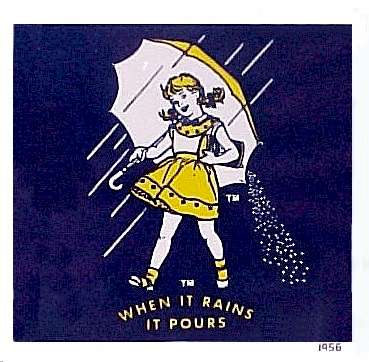
Also included is an article about Jeff Donaldson and the work he was doing at the time in Chicago with AFRI-COBRA. Lucia Lerner was an innovative illustrator and single mother working from Chicago who purportedly designed the Morton Salt girl. Nathan Lerner, who recently passed away, innovated at every turn. Geraldine McCullogh, William McBride, and the first 12x12 show at the MCA round out the show.

Friday, May 6, 2011

Photography

My husband is out of town, and while I remembered almost everything this morning--kids allergy medicine, dimes for the first grade store, check for the 4th grade party, snacks, lunches, walk the dogs, lock the doors--I did forget my notebook with my notes on the archive in it. I was due to install a new mini-exhibition, so when I realized I had forgotten it, I figured I would just wing it.
For the first time since starting to read, I browsed back through the archive, starting at A. I flipped through the files looking for photographs I remembered and found ones I had forgotten. I think I have put together the best show yet.
lots of good photography in a tiny space

There is a proof sheet from Flo-tilla, when artist made boats were floated down the river through the city. I included a haunting infrared photograph by Joan Moss. There are two of my favorites from previous exhibitions, a Jeanne Dunning announcement and two early Kenneth Josephson prints with his annotations. Announcements from shows by Joseph Jachna, Pamela DeMarris, Stephen Albair, Jane Fulton Alt, Pam Frederick and Mary Jo Bangs round out the show.  The show includes work by a photographers with commercial practices as well, including Steven Gross, William Frederking and Sam Hong.

Georgios Katsagelos
It felt like curation on speed! I imagined a museum curator going through flat files and simply pulling his or her favorites (or an emerging theme) without researching it first, without presenting an argument. It was selection as a subjective loving act—finding and showing with only a few constraints. The recent show on Ray Yoshida at SAIC curated by Corbett and Dempsey had this feeling: I think that is why it was such a moving show. So many of the early Yoshida paintings were from his own collection. I imagined them tucked away in corners of his home and studio. The related artists' works had a similar feeling of intimacy and relationship: lets use this one, Ray always loved this one, they might have said at their studio visit with the curators.

As usual I have an immense feeling of joy when I pull these mini-exhibits together: there is so much wealth in this archive. These photographs show the rich experimental honesty of artists taking pictures in Chicago.

Monday, April 18, 2011

Art Worlds

a photograph of Lee Godie by Steven Kagan, from Carl Hammer Gallery
Thousands of ways to live a creative life are represented in the Chicago Artists' Archive, from outsider artists like Lee Godie to Grace Lai, the diminuitive painter of construction sites, to artist Jeff Whitfield, former facilitator of the Creative Arts Program at Statesville Prison in IL.

While not as prevalent a myth now as in years past, the notion of the individual artist working alone is a fallacy in the economy of creative practice. One of my standby art references, recently reissued in a 25th anniversary edition, is Art Worlds. Written by one of my husband's heroes, social scientist Howard Becker, it describes how artists are deeply embedded in distributed networks. Artists never go it alone: they work with clients, organizations, dealers, administrators, technicians and marketers.

Any one folder of the Chicago Artists' Archive contains tens to hundreds of different approaches to creative practice. (Check the last names to see how far I have gotten in my reading: I am at M--actually Mc!) Artists representing a wide range of art worlds include Barbara Cooper, sculptor and public artist, wallpaper artisans Koessel Studios, art critic CJ Bulliet, painter of war Tom Lea, funder Bertha Masor, restorer Lido LippiColin McFrangos, poster artist or Bill Lavicka, scavenger writ large. Documents about these artists in the Chicago Artists' Archive reveal the larger network each practitioner builds and participates in while maintaining a high level of individual creativity and craftsmanship.


Print by Roger Brown, Cole Taylor Collection, SAIC
 One entry in the CAA is an article on Sydney Taylor, a director of Cole Taylor Bank. The bank built a large and idiosyncratic art collection and held exhibitions in their downtown bank. Taylor is quoted in an article from the period as saying,
After Martin Luther King was killed, we thought we could use art as a way to calm things down. There had been rioting. Buildings were burned down. It was scary. We started holding exhibitions as a way to help people understand the cultural contributions each group was making because we all were there together in the heart of the city.
This quote reminds me of the gentle power of setting a precedent, of making the creative gesture. The layers of worlds in that simple quotation—nation, city, neighborhood, bank, workers, collectors, artists, citizens—represent the strength of recognizing and utilizing existing networks as contexts for art.

Thursday, April 7, 2011

Art Leagues

Art Leagues are spread throughout suburban Chicago and show up frequently in the Chicago Artists' Archive.  The North Shore Art League, which serves the area where I live, seems to have been a vital place for making, seeing and presenting contemporary art by well known national artists from the 50s to the 70s. You can see by this current Google Maps search that the Art Leagues are alive and well:
Art Leagues in the Chicago area
There is very little history online about Art Leagues, but in general they are non-profit community based arts organizations that support, exhibition and teach visual arts. From what I can tell from the archive, local Leagues were inclusive and programming-oriented. An artist I am reminded of in this context is Eleanor King Hookham, an artist who had a dream to open a contemporary art museum in Elmhurst. She started by founding the Elmhurst Artist's Guild. After many years of community effort, she founded the Elmhurst Art Museum, one of our areas fine regional museums. (story from the Chicago Reader in the Chicago Artists' Archive).

Artists and Art Leagues included in this two week exhibition include:
North Shore Art League: for exhibitions and talks in the 1970s including Ben Mahmoud and Kwak Wai Lau
Oak Park Art League: for a 1980s exhibition of work by Ray Martin
Municipal Art League of Chicago: exhibition by Tom Lynch

Hidden Pages Brought to Light

My show at the CPL closed back in October, but I have continued to read the archive. I am now almost done with M so have a number of months left in my quest to read the entire collection. I am putting up bi-weekly exhibits of archival materials. I will post the artists and subject area of each exhibit here, plus any nuggets I find in a flat case on the 8th floor. Please come by and take a look!

Wednesday, October 13, 2010

mini exhibitions from the archive

Every couple weeks I am putting together a small show of work from the archive. The work is installed in a flat document case on the 8th floor entry of the Harold Washington Library Center.


Show One: Women:
Lillian Florsheim | Ruth Duckworth | Jeanne Dunning | Kathleen Blackshear | Mary Gehr Ray | Frances Badger | Eleanor Coen | Mary Arendt


women in the CAA: Ruth Duckworth's snapshots of an installation, handwritten prose by Mary Arendt
a show announcement for Jeanne Dunning, whose photographs are installed on the 8th floor.


Jeanne Dunning photograph permanently installed on the 8th floor.
Show Two: Men:
Leon Golub | Ted Gray | Joseph Goto | Tony Goskie | Patricia Green | Cosmo Campoli | Dan Grzeca |Bill Harding | Oliver Grover | John Rogers Cox

men in the CAA: Leon Golub wins a $100. purchase prize, flanked by
a baby blanket on the left, and a high school purchase prize on the right.
Show Three: Objets d'Art:
Beth Dunlap | William Jacobs | Kenneth Josephson | Karen Finley | AK Bilder | Robert Heinecken | Catherine Gass | Shmura Campbell | Paul Clark | Harold Haydon | Julian Harr | Mark Hauser | Inara Cedrins | Ike Heilbron | Alice Culbert

Show Four: N.A.M.E:
This exhibition includes reviews, announcements and ephemera from the early years of N.A.M.E., an influential artist-run gallery in Chicago.

Wednesday, September 22, 2010

why read the archive?


When I agreed to do the exhibition, the curator Leslie Patterson mentioned that the Chicago Artists' Archive is housed in the Visual and Performing Arts Library, where my show is installed. I am a recent transplant to Chicago, and I live about a half hour outside the city, so reading the Archive allows me to learn Chicago art history during the day. I come up with many reasons not to drive down to openings (why on Friday nights? when traffic is the worst?). I wrote this post about the archive in June, which lays out a bit about the Archive and what I have been looking at.

The real reason to read this archive is its unique status as a regional open and free artist archive. While my research is far from complete, a few hours of Google searches has unearthed many archives, but none quite so beautifully simple in its conception or as extensive in its scope. If you make or made art in Chicago or the Chicago area, or were born here and went on to have an artistic career by any definition, your work belongs in the Chicago Artists' Archive. There is no curator making selections for the archive or editing it in any way. If you submit, you are included. One artist made the CAA into a public archive for his work, sending 'archival' CDs with his photographs, inventory lists, regularly updated resumes, and statements.

I have learned an enormous amount already about Chicago's art scene. Of note are the longevity and significance of artist-run spaces and galleries, as well as the tremendous influence of the School of the Art Institute.  And I am only in the middle of the H's, a third of the way through.

When I am full of the archive, I walk out to see the city's public art, visit the SAIC or Columbia College student galleries, the Pop-Up Art Loop galleries, the shows at the Art Institute, and then stop at the MCA on the way back to the Northwestern shuttle bus. Every day is full of art these two months, and that is the best reason to read the archive.